Why Isn't My Business Showing on Google Maps?
Your business may not show on Google Maps because your Google Business Profile is unverified, suspended, or lacking local authority. Issues like incorrect categories, low proximity to the searcher, or poor SEO relevance also hide listings. Ensure your profile is verified and optimised to appear in search results.
It can be incredibly frustrating to search for your own company and find that your business showing on Google Maps simply isn't happening. For many local owners, Google Maps is the primary source of new leads. If you aren't there, you are essentially invisible to a huge portion of your local market.
There are several fundamental reasons why a listing might not appear. Sometimes it is a simple technical oversight, while other times it is a result of Google’s complex ranking algorithm deciding that other businesses are more relevant to the user’s specific query. Understanding these nuances is the first step toward reclaiming your digital storefront.

Is your Google Business Profile verified yet?
The most common reason for a missing listing is a lack of verification. Google needs to confirm that you are the legitimate owner of the business and that the physical location actually exists. Without this step, your profile remains in a 'pending' state and will not be visible to the public.
- Check your Google Business Profile dashboard for a 'Verification Required' status.
- Request a postcard, phone code, or video verification as prompted by Google.
- Ensure the address you provided matches your actual physical location exactly.
- Wait the full duration (sometimes up to 14 days) for the verification to process.
- Avoid making major changes to your name or address while verification is pending.
Once verified, it can still take a few days for the systems to sync. If you've been verified for weeks and still see nothing, you may need to look at Google Profile Optimisation to ensure all fields are correctly populated.
Understanding how Google ranks local businesses
Google doesn't just show every business in an area; it ranks them based on what it thinks the user needs. If you aren't showing up, you might just be buried on page five. Google uses three primary pillars to determine local rankings: relevance, distance, and prominence.
Relevance refers to how well your listing matches the searcher’s intent. If someone searches for 'vegan bakery' and you haven't specified that you offer vegan options in your categories or description, you won't show up. Distance is exactly what it sounds like—how far you are from the searcher. Finally, prominence is a measure of how well-known your business is, based on reviews, backlinks, and general web presence.
Why is my listing suspended or hidden?
A suspension is a business owner's worst nightmare. Google may suspend a profile if it suspects 'spammy' behaviour or a violation of their guidelines. This often happens if you use a P.O. Box as an address, use a keyword-stuffed business name, or if multiple businesses are operating out of the same residential suite without proper distinction.
If your listing was visible and suddenly vanished, check for a notification in your dashboard. A 'Soft Suspension' means you can still see the listing but can't manage it, while a 'Hard Suspension' removes the listing from search and maps entirely. To fix this, you must identify the violation, correct it, and submit a reinstatement appeal. This process requires patience and a clear understanding of Google's policies.
How does proximity affect my visibility?
You might not be showing up simply because of where you are standing when you search. Google Maps results are highly localised. If you are searching for your business while standing five miles away, and there are three competitors between you and your shop, Google will likely show those competitors first.
- Proximity is the #1 ranking factor for the 'Map Pack'.
- Search results change block-by-block in dense urban areas.
- Use a 'local search grid' tool to see how you rank at different distances.
- Focus on Local SEO to expand your 'radius of visibility'.
- Ensure your 'Service Area' is correctly defined if you don't have a storefront.
Common reasons for low visibility in local search
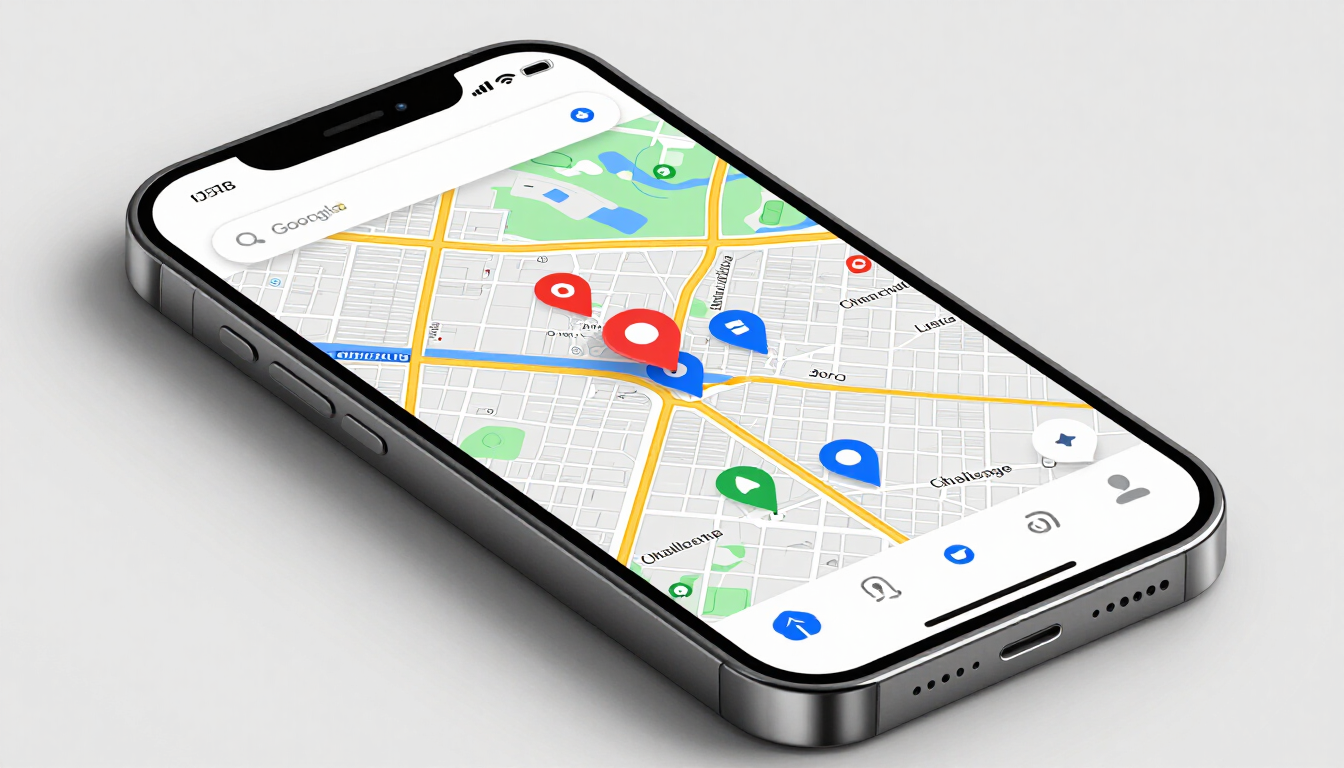
Sometimes, your business showing on Google Maps is technically happening, but your ranking is so low that nobody sees it. This is often due to 'thin' content on your profile. If you haven't added photos, haven't gathered recent reviews, or have left your business description blank, Google perceives your listing as less reliable or less active than others.
Another culprit is the 'Filter' effect. If your business is located in the same building as a competitor in the same category, Google might filter one of you out to provide variety to the user. To combat this, you need to prove you are the more prominent and relevant choice through consistent updates and high-quality local signals.
How can local keyword research help?
Keywords aren't just for blog posts; they are essential for your Google Business Profile. When people search for specific services, Google scans your profile, your reviews, and even your website to see if you are a match. If you haven't done proper Local Keyword Research , you are missing out on the specific terms your customers are actually typing into the search bar.
For example, a plumber shouldn't just target 'plumber'. They should target 'emergency pipe repair', 'boiler installation', and 'unblocking drains'. By integrating these terms into your business description and your 'Services' menu, you increase the chances of appearing for a wider variety of searches. This strategy is a core part of any comprehensive Local SEO plan.
Should I use a citation builder service?
Citations are mentions of your business name, address, and phone number (NAP) across the web. Think of them as 'votes of confidence' for your location. If your business information is consistent on Yelp, Yellow Pages, Facebook, and local directories, Google feels more confident that your data is accurate and is more likely to show you on the map.
Using a Citation Builder ensures that you don't have conflicting information online. If one site says you are at '123 Main St' and another says '123 Main Street', it can create 'NAP inconsistency', which confuses Google and hurts your rankings. Consistency is key to building the 'prominence' pillar mentioned earlier.
Optimising your profile for better visibility
If you want to stay ahead of the competition, you need to go beyond the basics. Regular activity is a signal to Google that your business is thriving.
- Upload high-quality photos of your storefront, products, and team weekly.
- Post regular updates (Google Posts) about offers or news.
- Respond to every single review, both positive and negative.
- Add a detailed list of services with descriptions for each.
- Ensure your website is mobile-friendly and fast, as this impacts local rank.
Many businesses see a significant lift just by treating their Google profile like a social media account. If you're unsure where to start, looking into SEO Pricing for professional management can save you dozens of hours of trial and error.
Should I get an AI search visibility audit?
As AI continues to change how people search (think ChatGPT, Perplexity, and Google's own AI Overviews), simply being on the map isn't enough. You need to know how AI models perceive your business. An AI Search Visibility Audit can help you understand if your business is being recommended by these new technologies.
These audits look at how 'scrapable' your business information is and whether you are mentioned in the high-authority datasets that AI models use to provide answers. It is the next frontier of local marketing, ensuring that when someone asks an AI assistant for the 'best coffee near me', your name is the one it speaks.
To ensure your business showing on Google Maps remains consistent and high-ranking, follow this simplified checklist. If you hit all these points and still aren't visible, it might be time for a deeper technical audit of your website and digital footprint.
- Confirm your verification status is active and not pending.
- Audit your NAP (Name, Address, Phone) for 100% consistency across the web.
- Select the most specific primary category and relevant sub-categories.
- Gather at least 5-10 high-quality reviews with text (not just stars).
- Ensure your website link on the profile is working and points to a relevant page.
In summary, visibility issues usually stem from verification gaps, lack of local authority, or ranking factors like proximity and relevance. By focusing on consistent data, high-quality content, and regular interaction, you can move your business from the shadows of page two to the top of the Map Pack. Start with the basics, then use tools like Local Keyword Research and Citation Builders to solidify your lead over the competition. If you need a comprehensive overview of your current standing, don't hesitate to book an AI search Visibility Audit to see the full picture of your online presence.
Recent Posts