

How to Get Found on ChatGPT and AI Search (2026 Guide)

21 July 2026

Share this article

To get found on ChatGPT and AI search, you must implement Answer Engine Optimisation (AEO). This involves creating clear, authoritative content that directly answers specific user queries. AI models prioritise high-quality data, structured schema markup, and verifiable facts to generate accurate responses for conversational and generative search results.

AI Search Visibility

What is Answer Engine Optimisation (AEO)?

Answer Engine Optimisation, or AEO, is the strategic process of making your website’s content easily discoverable and extractable by artificial intelligence models like ChatGPT, Claude, and Google’s Gemini. Unlike traditional SEO, which focuses on ranking in a list of blue links, AEO aims to position your brand as the primary source for the direct answer provided by the AI. As more users turn to AI for immediate solutions, being the cited source is the new benchmark for digital authority.

For SMEs, this shift represents both a challenge and a significant opportunity. You are no longer just competing for a click; you are competing to be the "truth" that the AI presents to the user. To succeed, your content must be structured in a way that Large Language Models (LLMs) can parse quickly. This means moving away from vague marketing jargon and toward precise, data-backed declarations. If you want to see how your current site stacks up, consider an AI Search Visibility Audit to identify gaps in your current strategy.

Modern search engines are evolving into "engines of everything." They don't just find pages; they synthesise information. This synthesis relies on the clarity of your digital footprint. By focusing on AEO, you ensure that when an AI is asked about services in your industry, your business is the one it recommends. This requires a shift in mindset from broad keyword targeting to specific query resolution.

How does ChatGPT find information for users?

ChatGPT and similar AI platforms do not "crawl" the live web in the same way Google does for every single query. Instead, they rely on massive datasets they were trained on, supplemented by real-time browsing tools that search the internet for the most recent data. When a user asks a question, the AI uses a process called Retrieval-Augmented Generation (RAG). It searches for relevant documents, extracts the key facts, and then generates a conversational response based on that information.

To be selected during this retrieval phase, your website needs to demonstrate high levels of E-E-A-T (Experience, Expertise, Authoritativeness, and Trustworthiness). The AI looks for consensus among sources. If multiple authoritative sites point to your business as a leader in a specific niche, the AI is far more likely to include you in its answer. This is why consistent Content Creation is vital for building a library of authoritative information that AI models can trust.

Furthermore, ChatGPT prioritises information that is presented in a logical, easy-to-digest format. It looks for:

  • Direct answers to specific "who, what, where, why, and how" questions.
  • Standardised data formats like JSON-LD schema markup.
  • Clean, accessible HTML structures that separate headers from body text.
  • Factually accurate statements supported by external citations.
  • Recent updates that show the information is still relevant today.

Strategies to get found on ChatGPT and AI Search

To effectively get found on ChatGPT and AI search, businesses must move beyond basic keywords. The goal is to provide the most comprehensive yet concise answer to a user's problem. AI search engines are designed to reduce friction for the user, so your content should do the same. If a user asks for the "best local SEO services," the AI will look for reviews, service lists, and geographic relevance.

  1. Focus on Long-Tail Conversational Keywords : Use natural language that reflects how people actually talk. Instead of "SEO tips," target "how can a small business improve its local search visibility in 2026?"
  2. Implement Comprehensive Schema Markup : Use technical SEO to tell the AI exactly what your content is about, whether it's a product, a review, or an FAQ section.
  3. Build Authority Through Niche Citations : Ensure your business is listed in industry-specific directories and mentioned on high-authority blogs within your field.
  4. Create Dedicated FAQ Pages : These are goldmines for AI search because they provide the exact question-and-answer format that LLMs love to extract.
  5. Optimise for Local Intent : For SMEs, local relevance is a huge trust signal. Ensure your NAP (Name, Address, Phone) data is consistent everywhere.
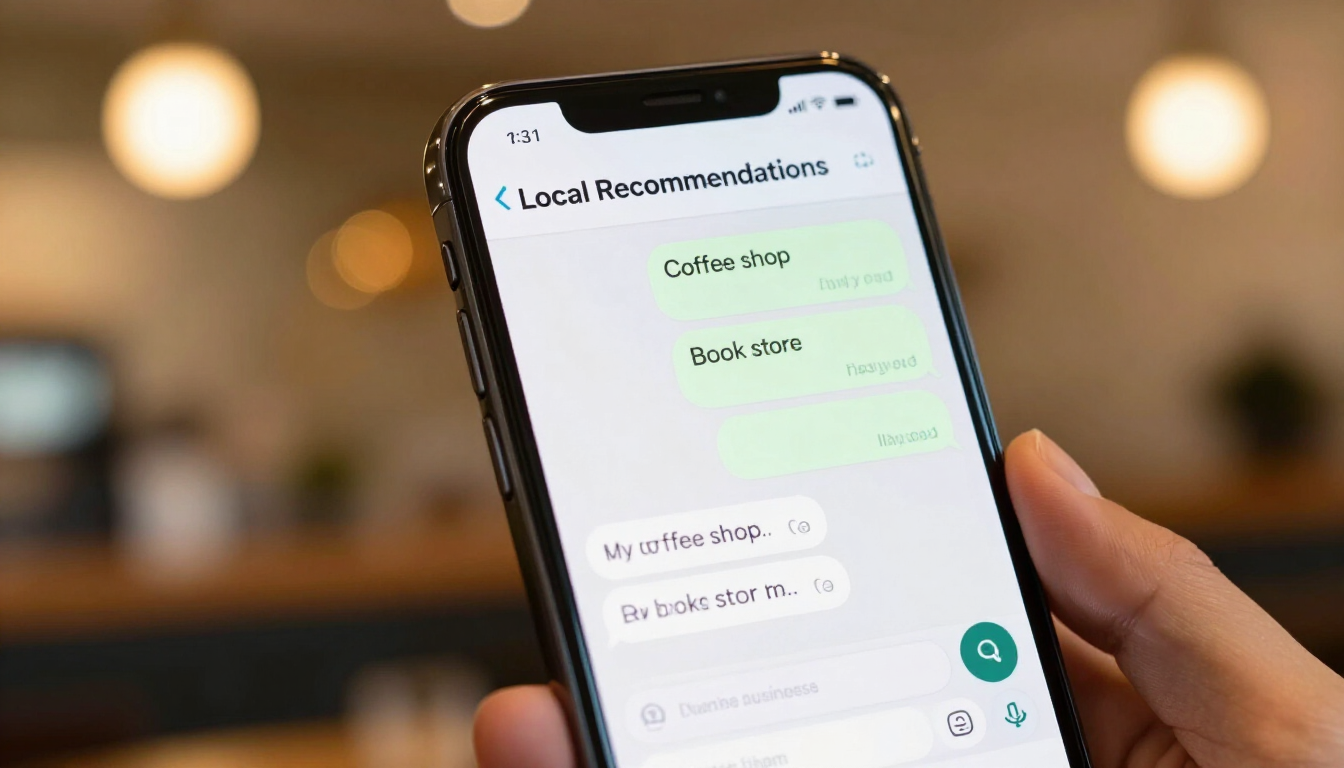
Conversational AI Interface

Why structured data is vital for AI visibility

Structured data is the language of machines. While humans read the text on your page, AI models use the underlying code to understand the context and relationships between different pieces of information. By using Schema.org vocabulary, you can explicitly tell an AI that a specific string of text is a "Price," an "Address," or a "Customer Rating." This removes ambiguity and increases the chances of your data being used in a rich snippet or a generative answer.

Without structured data, the AI has to "guess" the meaning of your content. While LLMs are getting better at this, they are still prone to errors. By providing a clear roadmap via schema, you reduce the risk of being misrepresented or ignored. This is particularly important for Local SEO efforts, where specific details like opening hours and service areas must be 100% accurate for the AI to recommend you to local searchers.

The Role of Local SEO in AI Search Results

For most SMEs, getting found on ChatGPT is often a matter of local relevance. When users ask AI for recommendations like "where is the best web designer near me," the AI relies heavily on local search signals. This includes your Google Business Profile, local citations, and the geographic keywords found on your website. If your local data is messy or inconsistent, the AI will likely skip over you in favour of a competitor with a cleaner digital footprint.

Local SEO and AI search are becoming inextricably linked. AI engines want to provide the most helpful, physically accessible options to the user. To dominate this space, you should engage in rigorous Local Keyword Research to understand the specific terms your local community uses. When you combine local intent with AI-ready content, you create a powerful synergy that drives both digital and physical foot traffic.

  • Verify your business on all major map platforms including Apple Maps and Bing.
  • Encourage detailed customer reviews that mention specific services you provide.
  • Include your city and neighbourhood names naturally in your H2 and H3 headings.
  • Ensure your mobile site speed is top-tier, as AI tools often check site performance.
  • Use localized content to show the AI you are an active part of the local economy.

How to monitor your AI search performance

Tracking your success in AI search is different from traditional rank tracking. You won't always see a direct click in your analytics because the AI might provide the answer without the user ever visiting your site (the "zero-click" phenomenon). However, you can still monitor brand mentions and citation frequency within AI responses. Tools are emerging that allow you to track how often your brand is recommended by LLMs for specific prompts.

Another way to monitor performance is through your traditional search console data. Look for an increase in impressions for long-tail, conversational queries. This often indicates that your content is being picked up by generative search features. Staying informed through resources like SEO and AI Insights will help you adapt as these tracking methods become more sophisticated. The key is to look for overall brand growth and direct inquiries that mention, "I found you through ChatGPT."

Optimising for Conversational Queries

AI search is inherently conversational. Users are no longer typing in fragmented keywords; they are asking full questions. Your content strategy should mirror this change. Write as if you are answering a client's question over coffee. Use a tone that is professional yet approachable, and don't be afraid to address the "pain points" your customers face directly in your headings.

When you optimise for conversation, you are essentially training the AI on how to talk about your business. If your website provides clear, concise explanations of complex topics, the AI will adopt that language when it explains those topics to its users. This is the ultimate form of brand building in the digital age—influencing the very language an AI uses to describe your industry. Keep your sentences relatively short and avoid overly complex jargon that might confuse the model's extraction process.

Summary of Key AI Search Takeaways

To thrive in the era of AI search and ChatGPT, SMEs must pivot their digital strategy toward Answer Engine Optimisation. The shift from traditional search to generative engines requires a focus on factual accuracy, structured data, and conversational content that directly addresses user intent. By positioning your brand as a trusted authority, you ensure that AI models will cite you as the go-to resource for your industry.

Core Action Steps:

  • Define Direct Answers : Start your articles with a 40-50 word summary that AI can easily clip.
  • Leverage Schema : Use technical markup to clarify your business details for AI crawlers.
  • Boost Local Signals : Maintain absolute consistency in your local listings to win "near me" AI queries.
  • Audit Regularly : Periodically check how AI tools describe your business and adjust your content accordingly.

If you're ready to dominate the next generation of search, now is the time to refine your approach. Stay consistent, stay authoritative, and ensure your business is the answer the world is looking for.

Recent Posts

Local SEO for Tradespeople in Swindon guide cover image
8 August 2026
Discover how to dominate search results with Local SEO for tradespeople in Swindon. Learn top strategies for Google Business Profile, citations, and lead generation.
AI-Cited Content Creation Strategy 2026
6 August 2026
Master AI-cited content creation in 2026. Learn how Swindon businesses can improve visibility in AI answer engines and stay ahead with GEO strategies.
Team of SEO experts working in a modern office environment.
4 August 2026
Discover how The Local SEO Company helps UK SMEs dominate search. Learn about our local SEO services, AI search strategies, and expert Swindon-based team.

Aerial view of Swindon town centre illustrating local business growth.
21 July 2026
Master the art of Swindon local keywords to boost your search rankings. Learn how to attract more local customers with expert strategies from Digital Optimus.

Google Maps location pin on a city street
21 July 2026
Understand why your business isn't showing on Google Maps. Explore common issues like verification, local SEO, and proximity to improve your ranking.