
5 Reasons Competitors Rank Higher on Google (2026)

16 November 2026

Share this article

Your competitors rank higher on Google because they usually provide stronger relevance, trust, authority, user experience and local signals, not simply because they have bigger budgets. The fastest gains come from comparing their Google Business Profiles, pages, reviews, links and technical performance, then fixing the gaps that matter most to your customers.

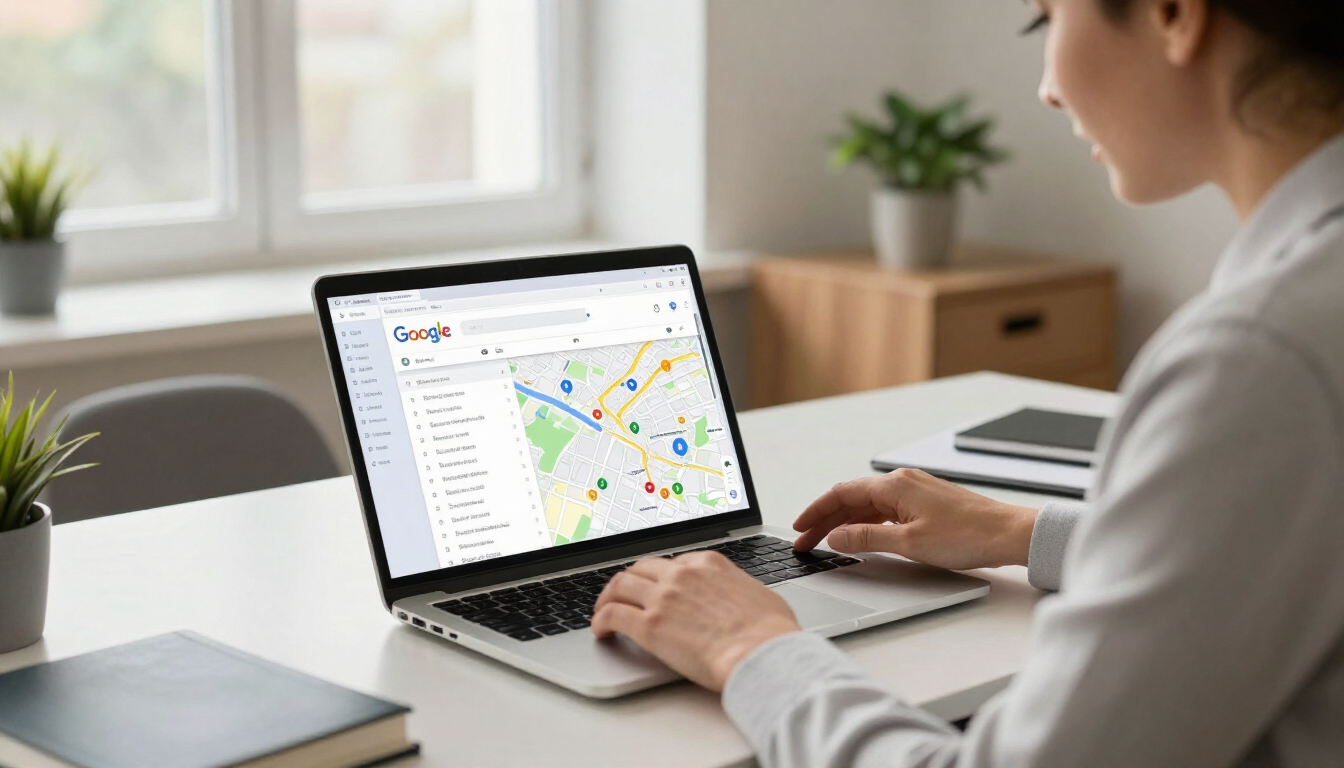
Local SEO analysis showing why competitors rank higher on Google

Why do competitors rank higher on Google?

Google ranks pages and businesses that best satisfy search intent. For local businesses, that means demonstrating clear relevance to a location and service, proving credibility through reviews and links, and delivering a fast, useful website experience.

Competitors may rank higher because they:

  • Target more specific local keywords
  • Have a better-optimised Google Business Profile
  • Earn more relevant reviews and local links
  • Publish more useful, expert content
  • Offer a faster and technically stronger website

Ranking is not a permanent position. A competitor can appear above you today while having weaknesses you can exploit tomorrow. Start with a structured comparison rather than making random changes.

1. Their keyword targeting is more focused

A common reason competitors rank higher is that their pages match what people actually search for. A page targeting “SEO” broadly may struggle against one focused on “local SEO for tradespeople in Swindon”.

Effective local keyword targeting reflects three elements:

  1. The service: what you provide, such as web design, accountancy or plumbing.
  2. The location: the town, city, county or service area you cover.
  3. The intent: whether the searcher wants information, a quote or a provider now.

Review the wording used in your competitors’ page titles, headings, service descriptions and FAQs. Then compare it with your own customer language. Our Local Keyword Research service can help identify valuable terms without relying on guesswork.

Do not create a separate, thin page for every nearby town. Build genuinely useful location pages with unique information, relevant proof and clear reasons to choose your business.

2. Their Google Business Profile sends stronger signals

For searches with local intent, Google Business Profile optimisation can have a major impact. Competitors may rank higher in the local pack because their profiles are complete, active and closely aligned with the services customers are searching for.

Check whether your profile includes:

  • The correct primary and secondary categories
  • A precise business description using natural service terms
  • Accurate opening hours, contact details and service areas
  • Current photographs of your team, premises, work and products
  • Regular updates, relevant products or services and useful posts
  • Questions and answers that address genuine customer concerns

Your business name should match your real-world branding. Adding keywords artificially can breach Google’s guidelines and create risk rather than improve visibility.

You should also assess how often customers leave reviews and whether the business responds professionally. A review profile with recent, detailed feedback can reassure both searchers and Google that the business is active and trusted. Learn more about Google Business Profile Optimisation .

3. They have more relevant reviews and local authority

Reviews are not simply a popularity contest. Quality, recency, detail and relevance all influence how convincingly a business appears to potential customers. A competitor with fewer reviews may still perform well if those reviews mention specific services and locations naturally.

Build reviews ethically by asking satisfied customers shortly after a successful outcome. Make the process easy, but never offer incentives for positive reviews or pressure customers to use particular wording.

Authority also comes from references beyond your website. Relevant local links may come from:

  • Professional associations and chambers of commerce
  • Local publications and community organisations
  • Trusted suppliers and business partners
  • Sponsorships, events and industry directories
  • Useful local resources that cite your expertise

Avoid buying large quantities of low-quality links. Relevance and trust matter more than volume. Consistent business information across reputable directories can support local trust too; our Citation Builder explains how to improve those references.

4. Their website answers search intent better

A competitor may outrank you with a smaller site because its pages are more useful. Searchers should immediately understand what the business offers, where it operates, why it is credible and what to do next.

For each important service page, check whether it includes:

  • A clear headline matching the search query
  • A concise explanation of the service and its outcome
  • Location information where local relevance matters
  • Evidence such as case studies, qualifications or testimonials
  • Pricing guidance or a clear explanation of the quotation process
  • Answers to common objections and practical FAQs
  • One obvious next step, such as calling or requesting a consultation

Avoid copying competitor content. Instead, add first-hand knowledge, original examples and useful detail that helps a buyer make a decision. Content should support a commercial goal, not merely repeat keywords.

Use descriptive internal links to connect related services, resources and tools. For example, businesses can review their current visibility with the Local SEO Self Audit , then explore Technical and Onsite SEO if the results reveal weaknesses.

Business owner improving a local service page and technical SEO checklist

5. Their technical SEO and page experience are stronger

Technical problems can prevent otherwise good content from performing. Google needs to crawl, understand and use your pages efficiently, while visitors expect a smooth experience on mobile and desktop.

Prioritise these checks:

  • Pages load quickly, especially on mobile connections
  • Important pages are crawlable and indexable
  • Titles and meta descriptions are unique and accurate
  • Headings follow a logical structure
  • Images are compressed and have useful alternative text
  • Internal links help users and search engines discover key pages
  • Forms, menus and phone links work on mobile devices
  • There are no broken pages, duplicate versions or confusing redirects

Speed is one part of the picture, not the entire strategy. A fast page with weak content will not reliably beat a slower but more relevant result. Use the Website Page Speed Tool , then fix issues in order of their effect on users and conversions.

A practical competitor comparison

Choose three businesses that rank above you for an important search and compare them in a simple spreadsheet. Record:

  1. Their page title, main heading and target location
  2. The services and questions covered on the page
  3. Review count, recency and recurring themes
  4. Google Business Profile categories and activity
  5. Relevant links, citations and trust signals
  6. Mobile usability, page speed and conversion options

Look for repeated patterns rather than isolated details. If all three competitors answer a particular question, show local proof and provide a clear quote button, those are likely expectations for that search—not instructions to copy their wording.

What should you fix first?

Prioritise changes according to opportunity and effort. Usually, the best sequence is:

  • Correct inaccurate business details and indexation problems
  • Improve the most valuable service and location pages
  • Optimise your Google Business Profile categories and information
  • Create a consistent process for earning genuine reviews
  • Strengthen relevant local partnerships and citations
  • Improve speed, mobile usability and enquiry journeys

Track rankings alongside calls, form submissions, direction requests and qualified enquiries. A position increase is useful, but better business outcomes are the real measure of successful local SEO.

Frequently asked questions

Does having more reviews guarantee higher rankings?

No. Reviews can support trust and local relevance, but rankings also depend on proximity, relevance, website quality, authority, competition and search context. Focus on genuine, recent feedback rather than volume alone.

How long does it take to outrank competitors?

The timeframe depends on competition, your starting position, website condition and available resources. Technical corrections can produce relatively quick improvements, while content, links and review growth usually require consistent work over several months.

Should I copy the pages of businesses ranking above me?

No. Analyse what they satisfy, then create a more useful and distinctive resource. Copying wording can reduce trust and does not give customers a reason to choose you.

Can a small business outrank a larger competitor?

Yes. A smaller business can compete by focusing on a specific service area, demonstrating first-hand expertise, building local authority and creating an excellent customer experience. Narrow relevance can beat broad scale for local searches.

The next step to outrank your competitors

If competitors rank higher on Google, treat the gap as a diagnostic opportunity. Compare their keyword focus, Google Business Profile, reviews, local authority, content and technical experience with your own. Fix the issues that affect relevance and customer confidence first, then measure rankings alongside calls and qualified enquiries. Start with a Local SEO Self Audit , review the highest-value pages and create a prioritised 90-day action plan. If you need expert support across Swindon or Wiltshire, contact The Local SEO Company for a practical assessment.

Recent Posts

Business not showing up on AI search results
9 October 2026
Find out why your business is not showing up on AI search and learn seven practical ways to improve AI search visibility, local authority and qualified enquiries.

Professional SEO analytics showing local business growth in Wiltshire.
6 September 2026
Discover what realistic local SEO results a business can expect within 6 months, from map pack visibility to increased enquiries in Swindon and Wiltshire.
Local search visibility analysis for Swindon businesses
24 August 2026
Discover why your business lacks local search visibility in 2026. Learn to optimise for Google Maps and Swindon B2B search with our expert SEO guide.
Google Maps ranking improvement strategy for local businesses
20 August 2026
Learn how to improve Google Maps ranking for your Swindon or Wiltshire business. Master local SEO strategies to dominate the Map Pack and attract more customers in 2026.
Local SEO Blueprint and Digital Marketing Strategy
14 August 2026
Boost your local search visibility with our 7-step perfect local SEO blueprint. Learn how to rank higher on Google Maps and AI search platforms today.
Local SEO for Tradespeople in Swindon guide cover image
8 August 2026
Discover how to dominate search results with Local SEO for tradespeople in Swindon. Learn top strategies for Google Business Profile, citations, and lead generation.
AI-Cited Content Creation Strategy 2026
6 August 2026
Master AI-cited content creation in 2026. Learn how Swindon businesses can improve visibility in AI answer engines and stay ahead with GEO strategies.
Team of SEO experts working in a modern office environment.
4 August 2026
Discover how The Local SEO Company helps UK SMEs dominate search. Learn about our local SEO services, AI search strategies, and expert Swindon-based team.

Aerial view of Swindon town centre illustrating local business growth.
21 July 2026
Master the art of Swindon local keywords to boost your search rankings. Learn how to attract more local customers with expert strategies from Digital Optimus.

Digital workspace showing AI search optimization concepts.
21 July 2026
Learn how to get found on ChatGPT and AI search engines. Our guide covers AEO strategies, local SEO, and content optimization for AI-driven platforms in 2026.
Show More